By Bixyl Shuftan
This is the fifth of our series of some of the top stories of the 2010s. For part one,
Click Here. For part two,
Click Here. For part three,
Click Here. For part four,
Click Here.
It's unusual for a business to rely on a single product, though it does happen, especially if that one product is highly successful. But what happens when that one product doesn't bring in the money it once did? There's also that practically every company dislikes having to rely on just one source of revenue as that leaves the business vulnerable. So even if a company starts out by selling one product that does very well at first, it will eventually diversify.
When Linden Lab started out, Second Life was it's one big focus. And after a few years it paid off handsomely as the virtual world was in it's golden age and it's active membership was many tens of thousands with many tens of thousands of sims of virtual land being paid for. But once SL was no longer the darling of the tech media, the people, and money, weren't coming in like they used to. In 2010, Linden Lab would see layoffs, their CEO calling it quits, and Philip Rosedale coming back as interim for several months then leaving again.

Finally in December 2010,
Rod Humble would be hired as CEO. Linden Lab's official statement pf his hiring described him as having a “20-year career in the game development industry,” with “work on more than 200 games.” He was noted for his work on “The Sims,” but was also one of the staff for the online game “EverQuest,” which was the most popular MORPG before “World of Warcraft.” While Second Life continued to improve and develop under his watch, by late 2011
he had his eye on Linden Lab having more than just that, “we will be launching some completely different products next year not related to Second Life.”
It started in February 2012 when Linden Lab
bought the game studio LittleTextPeople. Then in September,
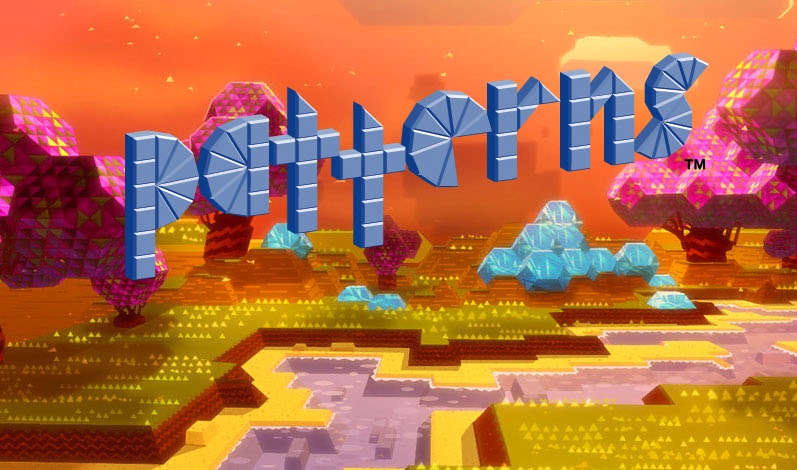
it launched two new products, Creatorverse and Patterns. Creatorverse was an iPad application that got compared to the app "Crayon Physics Deluxe." Patterns was described by critics as a knock-off of Minecraft, though
one reviewer called it "dramatically different" in some ways. In January 2013,
Linden Lab purchased Blocksworld. This was an iPad game described as "mix of Lego and Minecraft" that was clearly aimed at a younger audience. A few days later,
it announced the release of "dio." Someone from the Lab thought the "shared creative space" could be used for personal pages, games, and more. Others who took a close look at it called it "more like a MUCK/MUD/MUSH with pictures than anything else." In February,
Linden Lab released Versu, an interactive fiction application. In July,
the Lab bought Desura, which was a game distribution service but unlike Steam concentrated on those from smaller "indie" companies and startups.

By now, Linden Lab was using a new slogan. "Your world, your imagination," had already ceased to be used for some time, at least by the Lab. But with the release of Patterns, a new one was being used: "At Linden Lab, we make shared creative spaces." The reaction from the residents was mixed. Some were optimistic these products would eventually make the Lab money, which in turn could be invested to improve Second Life. But others felt they were being "taxed" by way of part of their fees and tier going to pay for things they would never use instead of the money being used to maintain the Grid. By the time Linden Lab acquired Desura, some wondered if the Lab was just throwing random things at the wall and looking for what sticks instead of making an effort to encourage a fanbase to develop for these new products, "it seemed like they were snapping up promising creative gaming projects and hoping that one might magically blossom into the next Minecraft. But they've yet to demonstrate the follow-through that would be necessary to make that happen."
As it turned out, of these new products only Blocksworld
would be a clear success. How much the others made, Linden Lab would never provide statistics. Eventually, Rod Humble would leave Linden Lab, and
Ebbe Altberg would take his place as CEO in February 2014. Among the first things he did was
take down Creatorverse, dio, and Versu later that month. In October,
Linden Lab would end it's Patterns game. Next month in November,
Linden Lab would sell Desura to Bad Juju Games. Of all the products bought up or made under Rod Humble, only Blocksworld, which was making good money, would remain.
It's unclear if Patterns and Desura would have succeeded had Linden Lab stuck with them, the latter shutting down when
Bad Juju went bankrupt in June 2015. But for whatever reason the company leadership didn't believe they were worth the trouble. By this time, the Lab had already started work on it's next-generation virtual world, which would later get the name "Sansar." It may be the Lab had decided to focus on it's new product, hoping it would bring in plenty of money when operational, instead of these two products that weren't making much. In any event, Blocksworld,
which is still available on Steam, remains all that's left of Linden Lab's short "Shared Creative Spaces" era.
Sansar would also turn out to be a disappointment, but that is another story.
Bixyl Shuftan