Showing posts with label Linden Lab. Show all posts

Wednesday, January 13, 2021

Whatever Happened to Linden Lab's Blocksworld?

 
By Bixyl Shuftan

Longtime residents may remember the days of Rod Humble when Linden Lab's strategy then was to offer more than just Second Life, but either developing or buying other products they hoped would make up for it's then declining income from the virtual world. Among them was Blocksworld, which the Lab acquired in January 2013. Described as "a mix of Lego and Minecraft," it was clearly aimed at younger users than Second Life. It did have one advantage to the virtual world then, it was playable on tablets. 

 
By the middle of the year, Blocksworld was doing pretty good. The game in August 2013 was doing downloaded at a rate more than Candy Crush. It probably wasn't making nearly as much as the game, which was described to be making $880,000 a day at the time, as it was a top download in just the "Family" category. But it was the most successful of Linden Lab's products other than Second Life, and the only such product of the "Shared Creative Spaces" era that would remain at the end of 2014.

In 2019, Blocksworld was still listed as one of Linden Lab's products and was available in Steam. But a recent look at https://www.lindenlab.com shows both Second Life and Tilia, but no sign of Blocksworld. And checking the Steam page, there was the following message: Notice: At the request of the publisher, Blocksworld is no longer available for sale on Steam. Checking Wikipedia, "As the game got downplayed by Linden Lab, the game remained without updates since early 2018, then the servers were fully shut down on June 17, 2020."

So what happened to Blocksworld? There was an effort by Linden Lab too make something of it. In March, they announced an update that allowed players to sell content for virtual coin and allowed people to cash the coin in for real-life currency. According to a page in fandom.com. "The Fall of Blocksworld," there was also, "a contest to see who could build the best world based off of a theme, determined beforehand by the Linden Labs Employees," from about once a week to once a month, at least until 2017. The Lab also made a deal with Hasbro and people had access to "My Little Pony" and "Transformers" sets, and build characters from the shows.

Unfortunately, the Lab was being described as lax when it came to enforcing content rules. Rival groups began forming and started engaging in "wars" in which a group would build a world showing another group as getting clobbered. There were also players that were uploading obviously adult content. According the the page, Linden Lab didn't act on them at first, and the result was people leaving due to the drama and the family-environment tainted. Eventually it did start to ban adult content uploaders, but their solution to the "wars" was to limit players to building one world a day and just three models a day. The Lab also stopped the building contests and didn't renew their license to allow MLP and Transformer content. The Lab was also described as laying off the one employee whom was good at keeping the place from getting hacked and loaded with questionable content. Then came a glitch that kept people from logging into the computer version of Blocksworld and caused problems with the tablet app.

Over time the page stated, the game had dropped in popularity to the point the Lab decided it was a lost cause, and that was the reason it was shut down in June 2020 with no announcement.

It should be noted that "The Fall of Blocksworld" was the only page I found with reasons as to why Blocksworld was closed. If there's any players from the place that saw what happened, your comments are welcome

Source: Wikipedia, Linden Lab, Fandom,

Bixyl Shuftan

Monday, February 24, 2020

Top Stories of the 2010s: Linden Lab's "Shared Creative Spaces"


 By Bixyl Shuftan

This is the fifth of our series of some of the top stories of the 2010s. For part one, Click Here. For part two, Click Here. For part three, Click Here. For part four, Click Here

It's unusual for a business to rely on a single product, though it does happen, especially if that one product is highly successful. But what happens when that one product doesn't bring in the money it once did? There's also that practically every company dislikes having to rely on just one source of revenue as that leaves the business vulnerable. So even if a company starts out by selling one product that does very well at first, it will eventually diversify.

When Linden Lab started out, Second Life was it's one big focus. And after a few years it paid off handsomely as the virtual world was in it's golden age and it's active membership was many tens of thousands with many tens of thousands of sims of virtual land being paid for. But once SL was no longer the darling of the tech media, the people, and money, weren't coming in like they used to. In 2010, Linden Lab would see layoffs, their CEO calling it quits, and Philip Rosedale coming back as interim for several months then leaving again.

Finally in December 2010, Rod Humble would be hired as CEO. Linden Lab's official statement pf his hiring described him as having a “20-year career in the game development industry,” with “work on more than 200 games.” He was noted for his work on “The Sims,” but was also one of the staff for the online game “EverQuest,” which was the most popular MORPG before “World of Warcraft.” While Second Life continued to improve and develop under his watch, by late 2011 he had his eye on Linden Lab having more than just that, “we will be launching some completely different products next year not related to Second Life.”

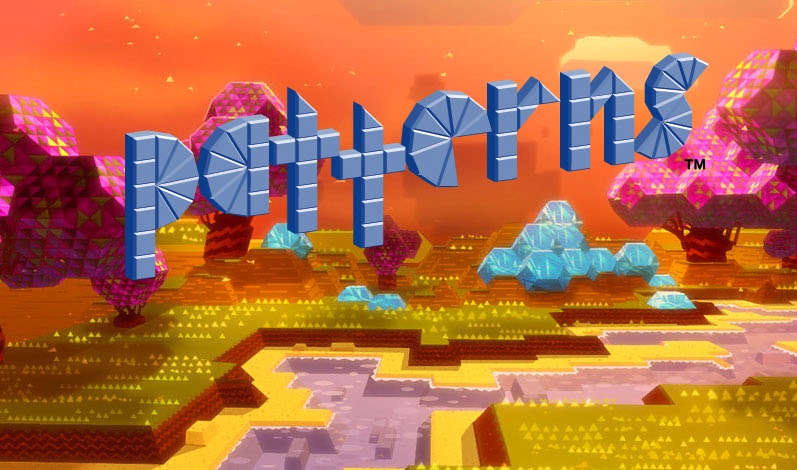
It started in February 2012 when Linden Lab bought the game studio LittleTextPeople. Then in September, it launched two new products, Creatorverse and Patterns. Creatorverse was an iPad application that got compared to the app "Crayon Physics Deluxe." Patterns was described by critics as a knock-off of Minecraft, though one reviewer called it "dramatically different" in some ways. In January 2013, Linden Lab purchased Blocksworld. This was an iPad game described as "mix of Lego and Minecraft" that was clearly aimed at a younger audience. A few days later, it announced the release of "dio." Someone from the Lab thought the "shared creative space" could be used for personal pages, games, and more. Others who took a close look at it called it "more like a MUCK/MUD/MUSH with pictures than anything else." In February, Linden Lab released Versu, an interactive fiction application. In July, the Lab bought Desura, which was a game distribution service but unlike Steam concentrated on those from smaller "indie" companies and startups.

By now, Linden Lab was using a new slogan. "Your world, your imagination," had already ceased to be used for some time, at least by the Lab. But with the release of Patterns, a new one was being used: "At Linden Lab, we make shared creative spaces." The reaction from the residents was mixed. Some were optimistic these products would eventually make the Lab money, which in turn could be invested to improve Second Life. But others felt they were being "taxed" by way of part of their fees and tier going to pay for things they would never use instead of the money being used to maintain the Grid. By the time Linden Lab acquired Desura, some wondered if the Lab was just throwing random things at the wall and looking for what sticks instead of making an effort to encourage a fanbase to develop for these new products, "it seemed like they were snapping up promising creative gaming projects and hoping that one might magically blossom into the next Minecraft. But they've yet to demonstrate the follow-through that would be necessary to make that happen."

As it turned out, of these new products only Blocksworld would be a clear success. How much the others made, Linden Lab would never provide statistics. Eventually, Rod Humble would leave Linden Lab, and Ebbe Altberg would take his place as CEO in February 2014. Among the first things he did was take down Creatorverse, dio, and Versu later that month. In October, Linden Lab would end it's Patterns game. Next month in November, Linden Lab would sell Desura to Bad Juju Games. Of all the products bought up or made under Rod Humble, only Blocksworld, which was making good money, would remain.

It's unclear if Patterns and Desura would have succeeded had Linden Lab stuck with them, the latter shutting down when Bad Juju went bankrupt in June 2015. But for whatever reason the company leadership didn't believe they were worth the trouble. By this time, the Lab had already started work on it's next-generation virtual world, which would later get the name "Sansar." It may be the Lab had decided to focus on it's new product, hoping it would bring in plenty of money when operational, instead of these two products that weren't making much. In any event, Blocksworld, which is still available on Steam, remains all that's left of Linden Lab's short "Shared Creative Spaces" era.

Sansar would also turn out to be a disappointment, but that is another story.

Bixyl Shuftan

Monday, August 6, 2018

News and Commentary: Sansar, One Year Later


By Bixyl Shuftan

It was a little more than a year ago that Linden Lab officially opened Sansar, it's "next-generation virtual world which had been in development for over three years, experienced a number of delays, and was the subject of no shortage of speculation by Second Life's residents. My initial impression was that while interesting it's best feature was it's, potential for improvement. Others had a firm thumbs down to the point it couldn't be mentioned in the Second Life Friends Facebook group.

Since then, there have been some improvements to Sansar. Last month, the Lab allowed content creators to sell custom avatars on Sansar's Marketplace. And less than two days later some appeared. As of the writing of this article, there were a total of 43 avatars either available for free or up for sale (some better than others). Among those you can get for free now is the "Draxacoon." The Lab also expanded the number of areas, or "experiences" that residents could have from three to twenty.

There are some visually stunning locations in Sansar. One of the more recent ones is the "Roddenberry Nexus," which according to Inara Pey was launched in August 1. Done by Linden Lab in cooperation with Roddenberry Entertainment, which is run by Eugene Roddenberry, the son of the man who created "Star Trek." Giving it a look, I found it offers more interactivity than previous Sansarbuilds I've seen with a lift that can move you between levels and buttons that when pressed will play recordings, such as one describing the transporter visual effects or the Star Trek Animated Series.

There was also another cooperative build done by the Lab with the help of the Smithsonian American Art Museum. Among the most interesting stories I've seen was a video by Draxtor Despress, showing a number of people holding a "Hoverderby" game. These people weren't just looking at Sansar, but interacting.

But there's still plenty to complain about Sansar. Sansar is also a more restrictive place than Second Life. It was widely expected from the begining there would be more restrictions on adult content than Second Life. While I read somewhere at least one builder tinkered with such builds, the most recent set of content guidelines have pretty much stated "no nudity and sex."

Content featuring sexually explicit content and activities, such as pornography, sexual acts, nudity and sexual services, including solicitation and offers for such content, are prohibited.

The Lab does say, "However, in limited educational or scientific contexts, we may make exceptions to these policies in our sole discretion." One example might be the piece of nude artwork Ryan Schultz saw at the Smithsonian art exhibition. But this wasn't the only problem Schultz saw. Even mentioning the names "Sansar," Linden Lab," or "Second Life," on a build could get you in trouble.


Any content or Sansar store listings that contain any references to Linden Lab, Sansar, Second Life, or any other Linden Lab-related terminology that may imply a relationship with, sponsorship, endorsement, or employment by Linden Lab is prohibited. 

So even making a "Sansar" t-shirt would get you a takedown notice from the Lab. And it's not just inworld content as in January, Schultz was asked to remove some pictures, and there appeared to be a problem with the name he was using for his blog at the time, "Sansar Newsblog." Hassling a major source of news about a virtual world you want to get word out about, especially a friendly voice, (and a big source of information for this article) isn't exactly the best of business tactics. And then there's the following line.

Do not upload Content that promotes or could be construed as primarily intended to evade limitations on Prohibited Content.

This line of the Terms of Service certainly leaves a lot to interpretation. Considering the Lab's past behavior, some content creators might decide not to take chances with a certain idea and instead make and sell it on another virtual world. In addition to the lack of a fashion market, this is probably one reason why Sansar has attracted little attention from more than a few bloggers. Though Schultz would say this was a common case of most newer virtual worlds.

For those frustrated by the long time it can take details to rezz in Second Life sims, Sansar can be just as bad or even worse. And there are apparently some problems with buying Sansar dollars in bulk using the "bundle" option.

And of course, while Sansar looks good, it still lacks the interactivity of Second Life and OpsnSim worlds. As it's been stated before, it's like comparing a theme park to a residential area, a nice place to visit, but not one you can virtually live. The examples I've stated are Sansar at it's best. The majority of other "experiences" aren't as good.

For these reasons, the userbase of Sansar remains tiny compared to Second Life. In April, the Newser reported the next-generation virtual world was averaging less than fifty users a day. Schultz went further, saying that the average was never higher than twenty. In fact, the graph he gave showed it was sometimes less than ten per day. For now, it seems stuck at a tiny userbase.

So why has Linden Lab persisted in sticking with Sansar? The question has been raised on whether the Lab has a "cultural shift" away from it's established virtual world to this unpopular newcomer, numbers remained small. Yes, it's normal for a company to want to show off it's latest product. But why leave out it's tried and true moneymaker? Perhaps with the stories about cyber-affairs, incidents like the "flying penis attack" on live TV, being banned from the "Twitch" streaming service due to some of it's sims allowing explicit content, maybe the Lab is feeling it can't really mention Second Life much to a mainstream audience. Another possible reason, with the talk about "safe spaces" at colleges where controversial speech is prohibited, perhaps the Lab is wondering if the next generation is looking less for the ability to express oneself and more about security from what might offend them.

As for the possibility of Linden Lab closing down Second Life anything soon to force it's population to Sansar: not a chance. Near the start of it's development before it even had a name, Will Burns once commented if Linden Lab made such a move, about a third would move onto the new grid, a third to smaller virtual worlds, and a third would give up on virtual worlds altogether. Today, I'd have to say if Linden Lab made such a suicidal move, in my opinion less than five percent would be inclined to move on to Sansar as their primary virtual world. While Linden Lab might survive thanks to it's Blocksworld income, it would be a much smaller company. Of the rest of Second Life's residents, it's my guess about three-fifths would move on to the various smaller virtual worlds, perhaps some moving between two or three to continue to meet up with friends. And the rest would likely give up on anything more than a passing interest in virtual worlds. Even for those who moved, they would most likely not spend as much money. It's one thing to invest money in virtual land and property if you believe the grid will be around for years. But if you're not sure how things will be six months down the road, you may not be so eager to put down that money.

In any event, Sansar is very much a work in progress compared to Second Life, and even the more established Opensim worlds. It still needs at least a year, probably longer, before it can truly stand on it's own. For those who insist Linden Lab should get rid of it, such as one person I talked to who called it "the Edsel of virtual worlds," keep in mind the Edsel was in production for three years before it's makers finally gave up on it. Most likely, it will take longer than that before the Lab decides it's efforts are best spent elsewhere.

Sources: Ryan Schultz (formerly the Sansar Newsblog), Modem World, Sansar , Draxtor Despres, venturebeat.com  

Bixyl Shuftan

Monday, August 7, 2017

More on Sansar


 By Bixyl Shuftan

On Monday July 31, Linden Lab finally opened it's new virtual world of Sansar. After visiting two of it's locations, my initial impression was the place had promise, but still needed a lot of work. Afterwards, I decided to look a little more for a better overall impression.

I would visit several more locations. One was highlighted in the Sansar Atlas: "Orgin Cinema 360." A second I had heard about in preview articles, "NASA  Apollo Museum" by LOOT Interactive. Two were from Maxwell Graf, "Respite" and "Rustica," the latter which was part of a preview video. Another was "Chess" by Lillani. Two more looked like places by less experienced builders, "Driveable UFO Bumper Cars" and the "Freebies Museum." And I decided to check the place done by SL video maker Draxtor Despress, "114 Harvest," and check Luskwood once again.

Of these four, the NASA  Apollo Museum I found to be the most impressive. There was a video screen with footage about the Apollo program, a display of a Saturn V rocket lying on the floor on it's side, and a display showing the path of the astronauts of the Apollo 11 mission took. For a someone interested in the space program, this would be very cool. Another detailed place was the "Orgin Cinema 360," which was described as a former arch-villain's lair now converted to more peaceful use. The center area was a 3-D panorama movie view, and stepping out, there was a detailed circular walkway. There was one moving object, a camera, that panned around. Below me were fans that whirled around.

They looked good. But as a Second Life resident, I couldn't help but notice what they didn't have. There was no interactivity. There were seats at the Orgin Cinema, but you could not sit down. You were limited to inside the movie area and the walkway, and that was it. While there were objects in the distance, you could not get to them. Orgin Cinema also took quite a bit of time to load, much more than a normal teleport in Second Life. And while the Apollo area looked great, unlike Second Life, you couldn't click on something for more information.

Maxwell Graf's "Respite" and "Rustica" had more room to walk around, and "Respite" had a very detailed,building, with a "rustic" look, the sound of a crackling fireplace. But you couldn't get up the stairs, and the sound of the fire was constant until you got some distance away from the dwelling, and then it was completely gone. I was about to walk around a while, but eventually I came to the end of the island. But once I got too far into the water, I "fell" down into some gray abyss. Rustica was a huge area of mountains and valleys. It looked less  like a detailed build and more about demonstrating how big an area in Sansar could get.

"Driveable UFO Bumper Cars" and "Chess" were small demonstations of what limited capacity for interactivity Sansar has at the moment. The first place was a gridlike driving area with several saucer shaped simple vehicles one could hop in by walking up to them, and pressing the "1" button. One could then "drive" the saucer by walking/pushing at it from the inside. I did notice it was possible to flip over the edge if you hit it hard enough, and pushing further, you would fall off into the abyss. After a few moments, you would respawn back to where you first appeared. With "Chess" it was possible to push against the pieces and move them. But when I tried to move one, I ended up moving a few, knocking over one. And there was no way to pick it back up.

Two places I haven't seeing on the Sansar viewer atlas after the first day were it's Luskwood area and "114 Harvest" by Draxtor Despres. I contacted Tengu Yamabushi in Second Life about the area that had seemed little more than a simple rocky savana. He told me Linden Lab had taken it down temporarily, "Seems you're not supposed to use a logo for the thumbnai. Who knew? ... Supposedly there's a policy, somewhere, that says the thumbnail has to be an in-experience screenshot, and no logos. Of course, not knowing that, I created a bog-standard-template world. And since it had no unique content, then, (I) just slapped a LW logo on it.  My bad."

And why couldn't I see it in the atlas if it was back up? Tengu told me about one big problem with the viewer atlas, "It's very easy to miss in the Atlas. There's new stuff accumulating in there and there seems no way to filter/search for anything." Still, he had been doing a little more work on the place, "We have a tree now! : It's not much of a tree, but it's a tree. It's a 'Charlie Brown Christmas' (style) 'Luskwood' tree." When I was able to take a look later, there was a larger tree with stone stairs leading to a platform on it.

Draxtor has emerged as a supporter of Sansar, helping Linden Lab with recent promition videos. So I was interested to see what his place was like. But I couldn't see "114 Harvest" on the viewer atlas. Then I saw on the Moni's World blog an address to the place. Taking a look at the Sansar website, there was a search bar on it's atlas that was missing in the viewer. So I was able to locate a location that I had heard the location of.

Checking "114 Harvest," I found myself in front of a house in the suburbs a car having the license place "DRAXTOR."  The front door was open, so I went in, and the only door inside open was the one to the basement which had a sign "First Lifers Keep Out." Downstairs was a couch in front of a TV playing one of his "Fluffee" videos from a few years ago, with a small radio room connecting. Back out of the house, I decided to look around, and fell through a hole of come kind, falling into the gray underneath. Down there was a rubber ball I could push around. The only form of interaction I had at the place.

In short, Sansar has a lot of potential, but there's not much to attract your run of the mill Second Life user. One big disadvantage is it's not that easy to hold events there. Tengu felt it's appeal would be limited among his fellow Luskwooders, "I'm not really sure how it will turn out.  We at Luskwood aren't really interested in 'experiences', we're first and foremost a community.  And I'm not sure how well the Sansar platform fits an online community. Two particulars: live music and collaborative builds, Primtionary, specifically. No way to do either right now in Sansar."

It should be noted Second Life was much different from how it is now to how it was on day one, or even how it was when it was a few years old from day one. It used to be everyone had to pay just to have an account or even to rezz a prim. Teleporting was once possible only through teleport hubs, and when you did it could be a mess with everything up your backside. It would be a long time before there was anything other than human avatars available. Second Life, while good, needed to be better. And eventually it was.

As for how many will use it? That's a question only time will answer. But when Second Life came around, there were only a handful of other virtual worlds that were unknown to most. Today, it's fair to say the majority with computers have at least heard of Second Life. So why aren't more using it? Perhaps it's bad publicity or it's not the kind of virtual experience they want, which Linden Lab seems to be thinking. Or maybe most computer users aren't that interested in virtual worlds that don't involve blowing something up.

So Sansar may just end up a much smaller alternative grid like InWorldz, with a few people and making it's owners a little money, but not much. Time will tell.

Sources: Moni's World 

Bixyl Shuftan